
Maryland Criminal History Records
Maryland criminal history records are managed by the Department of Public Safety and Correctional Services through the CJIS Central Repository. You can look up court case records online through the Maryland Judiciary Case Search, or get an official background check through the DPSCS fingerprint system. This guide covers how to find criminal history records in Maryland, how to request copies, and what options are available across all 23 counties and Baltimore City.
Maryland Criminal History Overview
Maryland's CJIS Central Repository
The Criminal Justice Information System, or CJIS, is Maryland's central hub for all criminal history records. It is run by the Department of Public Safety and Correctional Services (DPSCS). The CJIS Central Repository keeps fingerprint-supported criminal identification records for the whole state. Every arrest, conviction, and disposition that occurs in Maryland gets reported here. This is the only official source for a full Maryland criminal history record. Local police departments do not provide comprehensive criminal history checks. They direct requests to CJIS.
The CJIS system uses electronic LiveScan fingerprinting to process most requests. This technology cuts down errors and speeds up results compared to old ink cards. Out-of-state residents who need a Maryland criminal history check can request a fingerprint card by mail. After being fingerprinted anywhere, they send the card to CJIS at P.O. Box 32708, Pikesville, Maryland 21282-2708. Results are always mailed directly to the person who made the request. Third parties cannot receive your Maryland criminal history results.
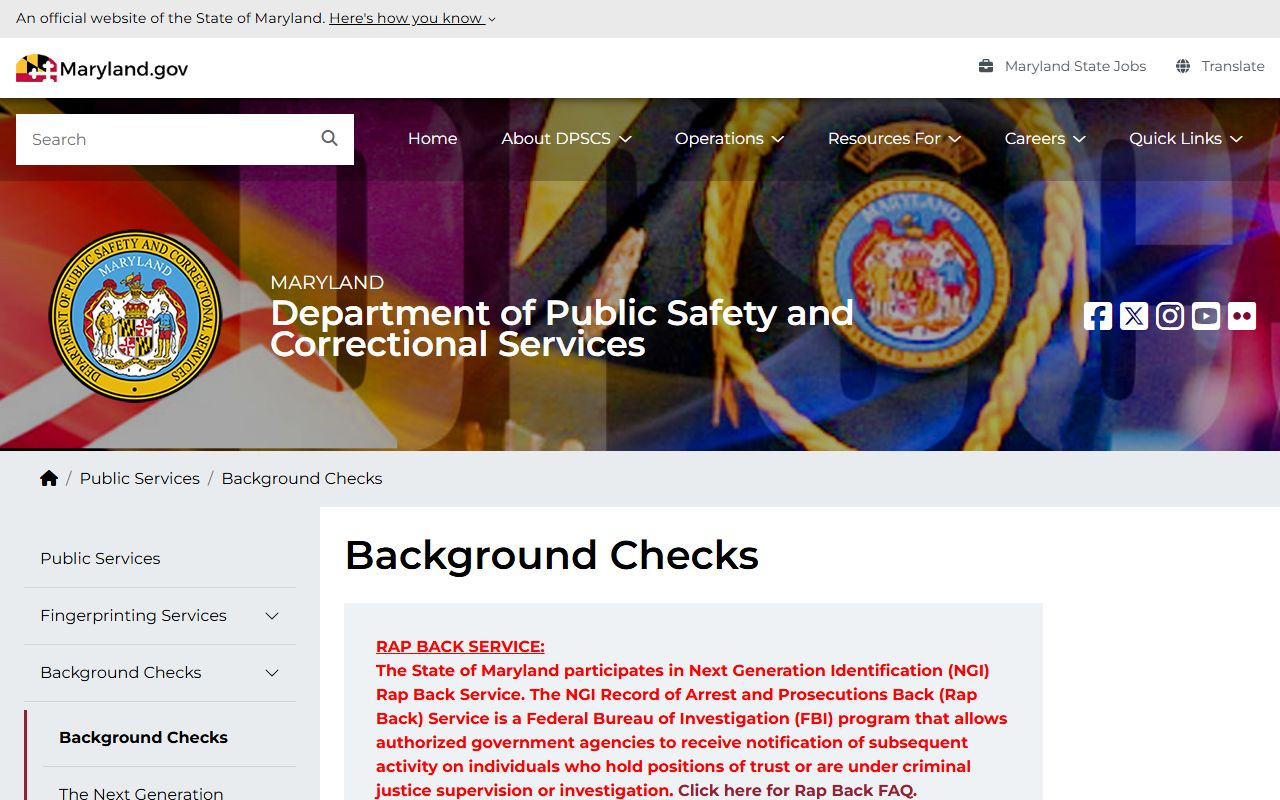
Call CJIS at 1-888-795-0011 or 410-764-4501 for help with any Maryland criminal history request. You can also visit the DPSCS background check page to review what is needed before you go in person.
How to Get Your Maryland Criminal History Record
Getting your Maryland criminal history record starts with a fingerprint. Go to an authorized fingerprint location in your county. Many Sheriff's offices offer this service. The Frederick County Sheriff's Office at 110 Airport Drive charges $20 plus CJIS fees. A full background check combining the state and FBI costs $58.00 in Frederick County. The state-only fee paid to CJIS is $18. A combined state and FBI check costs $38 or more depending on the location. On top of that, fingerprinting itself adds $5 to $20 at most sites.
You will need to fill out Form 015, the state fingerprint card. Once the fingerprint data is sent to CJIS, processing takes about 10 to 15 business days. Mail-in requests using ink cards can take 2 to 3 weeks. You can visit the DPSCS fingerprinting services page to find authorized sites near you throughout Maryland.
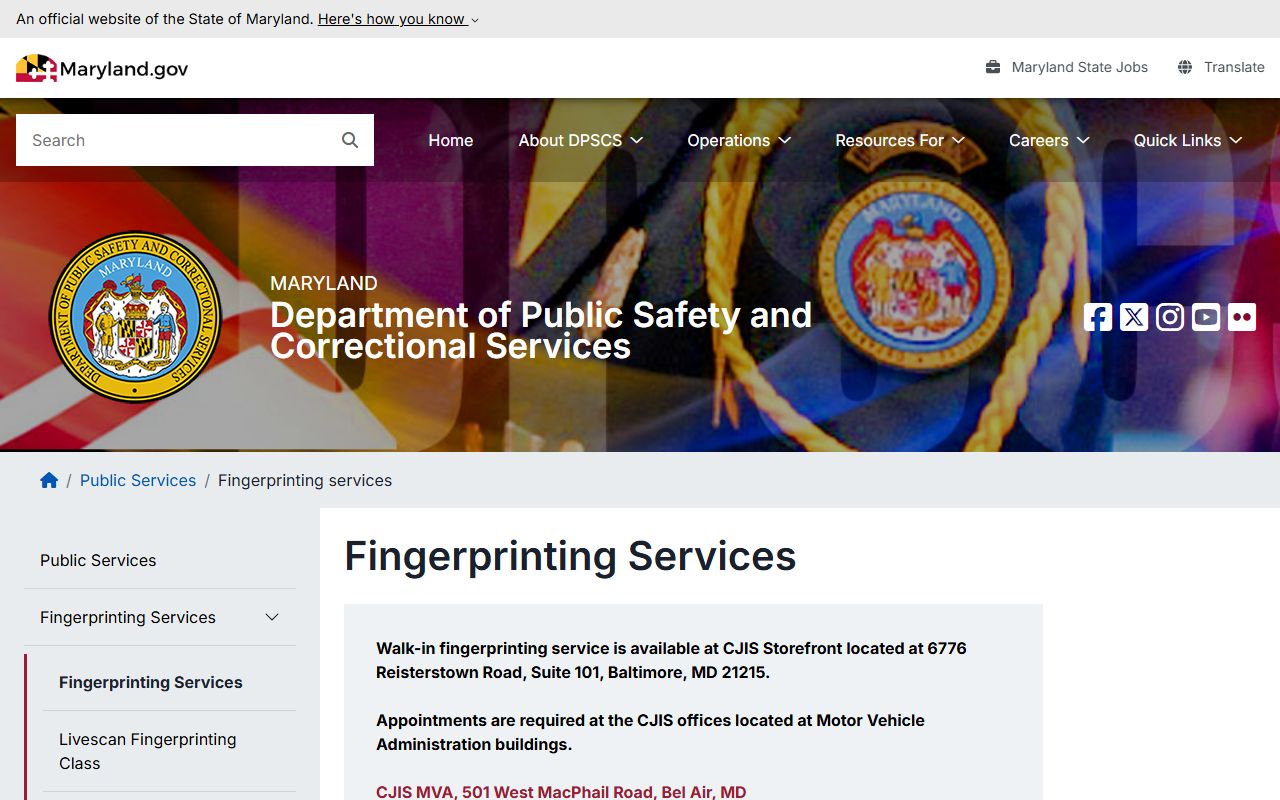
You can also go to your local Sheriff's office or Maryland State Police barrack to be fingerprinted using ink cards. The cost at most police stations in Maryland is $5 per card. Mail the completed card to CJIS at 6776 Reisterstown Road, Baltimore, MD 21215.
Maryland Judiciary Case Search
The Maryland Judiciary Case Search at casesearch.courts.state.md.us gives the public free access to case records from District Court and Circuit Court across Maryland. The database covers cases going back to 1989. You can search by name, case number, or citation number. By default, the system requires an exact name match. You can use a percent sign (%) to search partial names when needed.
Case Search shows case status, charges, court dates, and dispositions. But it has clear limits you need to know. Since changes went into effect in December 2021, the system defaults to exact names only. It also does not show cases where the charge ended in nolle prosequi, acquittal, or dismissal. Expunged records, shielded records, sealed juvenile records, and certain domestic violence protective information are all hidden from public view. This is why Case Search should never replace an official Maryland criminal history check through CJIS. Case Search gives you court records, not a complete criminal history background check.

Maryland Sex Offender Registry
The Maryland Sex Offender Registry is part of the DPSCS criminal history system. You can search it at dpscs.maryland.gov. The registry was created to protect children and the public from people with histories of sexual offenses. You can search by name, address, city, or zip code. Each entry includes the offender's photo, physical description, and conviction information. This is a free public resource available to anyone in Maryland.
Registration requirements depend on the type of offense. People convicted of certain offenses must register for at least 10 years. Those convicted of aggravated offenses must register for life. Registrants must re-register annually. Sexually violent predators must re-register every 90 days. Each of the 23 Maryland counties and Baltimore City has a designated local law enforcement unit that handles sex offender registration in that jurisdiction. The public cannot make individual requests to a neighbor's status. Written requests must be submitted through the proper channels outlined on the DPSCS website.

Expungement and Shielding in Maryland
Maryland law gives people two main ways to limit who can see criminal records. Expungement removes records completely. Shielding takes records out of public view but keeps them available to law enforcement. Both affect what shows up when someone searches Maryland criminal history records.
Expungement eligibility depends on how your case ended. If you were found not guilty, your charge was dismissed, or the State chose not to prosecute (nolle prosequi), you may be eligible right away. A stetted case requires a three-year wait from the date of disposition. Probation before judgment cases require a three-year wait after probation ends, or 10 years for certain offenses. For convictions, the waiting period runs 10 to 15 years depending on the crime. The filing fee for an expungement petition is $30 in Maryland, and fee waivers are available for those who qualify. After you file, you serve copies on the State's Attorney and the arresting agency. They have 60 days to object. Visit People's Law Library for detailed guidance on the expungement process, or check the Maryland Courts clean up record help page for official court resources.
Shielding works differently. It removes records from public searches but does not destroy them. Courts can shield certain misdemeanor convictions automatically after seven years. The REDEEM Act reduced waiting periods for some offenses in recent years. Shielding is the right option when expungement is not available for your case type in Maryland.
Maryland State Police and Criminal Records
The Maryland State Police plays a supporting role in the state's criminal history system. They handle certain investigations that cross county lines and manage firearm-related criminal history checks. The MSP website at mdsp.maryland.gov has resources on firearms permits and other state-level record functions. For individual criminal history requests, MSP points people directly to CJIS at DPSCS.

Court records are kept separate from the DPSCS criminal history system. The Maryland courts records page explains how to get court documents in person and through the electronic system. Copies of court records cost $0.50 per page at most county clerk offices. Certified copies cost more. Some Maryland counties also charge a search fee on top of the per-page copy fee. Prince George's County, for example, charges $7 per name search plus $5 for the first page and $0.50 for each page after that.
Access Maryland Criminal History Through DPSCS
The Department of Public Safety and Correctional Services runs most of Maryland's criminal record access systems. Beyond CJIS, DPSCS oversees the state's correctional facilities, parole and probation supervision, and the sex offender registry. Their main website at dpscs.maryland.gov links to all public-facing services related to criminal history in Maryland.
Two things are worth knowing about Ban the Box laws in Maryland. Montgomery County has Fair Criminal Record Screening Standards that limit when criminal history can come up in certain contexts. Prince George's County passed Bill CB-019-2024 that limits consideration of certain records including nonviolent felonies completed over five years ago and misdemeanors completed more than 30 months ago. These local rules affect how criminal history information flows in those counties. You can find details on Montgomery County's policies at the Montgomery County Circuit Court page.
Note: Court records and criminal history records are two different things. Case Search shows court activity, while CJIS holds the official fingerprint-based Maryland criminal history record.
Browse Maryland Criminal History by County
Each Maryland county handles local criminal records through its Circuit Court Clerk and Sheriff's Office. Pick a county below to find specific contact info and resources for criminal history records in that area.
Criminal History Records in Maryland Cities
Maryland's largest cities each have their own law enforcement agencies and record access options. Pick a city below to find local criminal history resources.